Monday, April 25, 2011

MOVIE REVIEW - PAUL

Again I was compelled to watch a current movie against my desire and better judgment.  I need to stop agreeing to this for "Paul" was even worse than "Beastly."  As before, I feel compelled to warn the public against viewing this movie.  Below I give a summary of the plot and my comments.

Distributor: Universal Pictures

Directed By: Gregg Mottola

Rated: R – for language including sexual references, and some drug use

Running Time: 1 hr. 40 min.
 
The film was written by and costars Simon Pegg and Nick Frost. This is ostensibly a science fiction fantasy that is a substantially degraded take-off of Close Encounters and E.T.  It stars Seth Rogen as the alien “Paul” (digitally reworked by Double Negative’s special effects) who crash landed in Wyoming in 1947.  After years of being a “guest” of the government, Paul escapes the military base where he has been playing the dual role of military guinea pig and consultant to the government.  Threatened with vivisection, Paul attempts to rendezvous with his own kind at Devil’s Tower (a shameless play on C.E.). 

Meanwhile two brits, Graeme Willy (Pegg) and Clive Gollings (Frost), are taking a wide ranging tour of the American sci-fi, alien, comic book, ninja sub culture.  They experience some predictable culture clashes with the locals and end up fleeing from a pair of angry good ol’ boys (David Koechner and Jesse "Landry" Plemons) whose monster truck they have accidentally damaged during panicked maneuvers of their oversized, rented motor home.

The headlong flights of both parties cross in the deserts of the southwest when Paul’s clumsy attempts to drive a stolen passenger car cause him to crash as he attempts to pass them in the road.  The meeting between the fugitive alien and the two ardent alien hunters goes rather awkwardly with some humorous but scatological moments.  After some difficulties, the two parties join in an effort to deliver Paul from his pursuers.

The plot is enhanced by the involvement of FBI agent Lorenzo Zoil [sic – a tasteless play on the stroy of ] (Jason Bateman) who directs two highly incompetent junior agents, Haggard (Bill Hader) and O’Reilly (Joe Lo Truglio), in the pursuit of Paul and consequently his conspirators. They are driven by characteristically ruthless demands of a mysterious “Big Guy” who is actually a woman played by Sigourney Weaver.

The plot is deeply marred by the introduction of the requisite heroine in the form of Ruth Trugg (Kristen Wiig), the daughter of stereotyped Christian fundamentalist who operates a trailer park where they hide from their pursuers.  

Ruth inadvertently confronts Paul, and having discovered his identity, ends up being kidnapped by the brits as they beat a hasty retreat from her protective,  Bible toting, shotgun wielding father.  Paul and Ruth have an inconclusive debate over the nature of God and creation that is conveniently ended when Paul performs an uninvited “mind-meld” and supposedly refutes all of Ruth’s beliefs with a torrent of universal facts.  Impressed, Graem and Clive submit to the same treatment, though predictably it helps none of the three to improve the quality character.  In fact this alien induced education causes Ruth to lower to the level of her profane, pot-smoking, fornicating abductors.  Paul is unimpressed by any of the better qualities of human kind and impervious to matters of faith.

The four-way chase: (1) Paul, Graem and Clive, (2) Zoil, Haggard and O’Reilly, (3) The GOBs and (4) Ruth’s father culminate in a rapidly expanding bar fight that is clearly borrowed from early western movie plots. The chase resumes after a narrow escape, a marijuana crazed camput and detours through a small western town. There the brits meet the FBI in a comic book shop brawl that involves a young, alien admiring karate student who aids the escape of the foursome in their improbable motor-home, get-away vehicle with a strategically placed kick.  The good ol’ boys leave the plot in the aftermath of the barroom brawl after they are shocked into a nervous breakdown by the appearance of Paul.  The add injury to insult, their pickup is again smashed by the errant motor home. The flight is briefly halted along the way when they stop at a fireworks shop where (due to low funds) they steal an expensive mortar display to be used for signaling Paul’s rescuers.  (Find one of those in gun-free, firework limited England!)

Haggard and O’Reilly shortly thereafter make their exit in fiery destruction ignited by their own blind obsession with capturing Paul and upstaging their superior.

Back on the road, the fugitives stop at the site of Paul’s original crash landing to make amends with the now aging girl who rescued Paul at the cost of social ostracism. She joins the band after a confrontation with the three agents results in the destruction of her home in a fiery blast and they temporarily elude their pursuers.  

Their final destination is in Wyoming at Devil’s Tower National Monument. There they use the fireworks to signal for Paul’s rescue ship.  Meanwhile, Agent Zoil has tracked them down as has The Big Guy, who arrives in a helicopter the landing lights of which initially appears to be the rescue ship. It turns out that Agent Zoil is the inside man helping Paul to escape and in a confrontation between him and his superior, the fivesome are left to face the gun-toting mystery lady alone.  They try bravely if ineffectually to protect Paul, temporarily incapacitating her just as Ruth’s father arrives, displaying the Bible that stopped the bullet intended for him.  He declares Paul a demon and attempts to blast him with the shotgun, hitting Graeme instead and wounding him fatally.

The Big Guy regains consciousness, and since no one had the presence of mind to disarm her (the effects of being stoned?), she holds the fugitives at gun point.  She is about to fire on Paul when unaccountably unnoticed, a massive spaceship lands directly on her as it did Paul’s namesake sixty years earlier.

Predictably, Paul intervenes and uses his “evolutionary advanced powers” to resurrect Graeme and heal the wounded agents. There is an emotional if disjointed farewell as Paul takes leave of his rescuers.  In parting, he is dismissive of Ruth’s father’s faith and contemptuous of Clive’s literary efforts.

The movie concludes with a return to the Com-Con scene where Graeme and Clive are hailed as first-contact, sci-fi author heroes and accorded the adulation of their fellow fantasy lovers.  Ruth is there in the audience as a devoted convert to the sci-fi crowd.   The scene is distinctly marred by Clive’s nod to a devoted and sexually exploited fan and a lesbian admirer hitting on Ruth.

My reaction to the film is twofold.  It was definitely entertaining and funny enough to extract several episodes of laughter from me. The special effects were convincing and the plot was remarkably well spun considering all the campy devices that were employed.  That’s the positive side.  

The ongoing profanity, crude vulgarity and openly anti-Christian elements thoroughly erased any entertainment value in the movie for me.  This movie is advertised entertainment by geeks and for geeks.  I’ve been labeled a geek, and can’t relate to it. It is more than entertainment.  It is blatant attack on truth.  Its origins are in the fantasy world of pulp comic books, low-grade science fiction and unthinking alien lore.  It is also a vehicle for the anti-establishment drug culture, sexual perversion and their occult origins.  

The character of Paul is an archetypal anti-hero, lacking only a violent nature to complete the type. He is a mendacious, arrogant, bisexual, irreligious, pot-smoking, anti establishment, uncultured, self-centered slacker. His only superior qualities are supposedly advanced intelligence and extrasensory powers, which he chiefly uses to his own advantage.  His role in healing those injured in his escape is clearly an artifice to endear him to the audience and gloss over the shallow nature of his character.

In writing the screenplay of this movie Pegg and Nick Frost make a general stereotypical attack on American culture from GOBs in pickups to gun-toting state troopers.  They are especially vicious in their treatment of ordinary Christian folk, painting a stark and undeserved picture of oppressive, small-minded control and violent intolerance for the followers of the Prince of Peace.  Their only positive concession to the faith is to perseverance.  It’s an ugly, undeserved and crudely drawn caricature.

I contrast they promote the culture of fantasy and self abuse that is fostered by the extreme elements of the comic book crowd.  Their movie implies that this subculture is liberating and fulfilling whereas it is actually deceptive and exploitative.

Such images could only find a welcome home in the microcosmic fantasy world of comic books and conspiracy theories.

The movie is further compromised with it’s unapologetic pandering to the homosexual and drug cultures.  This is without doubt an attempt to profit from those spiritually bankrupt groups.

While I could see a way to redeem the Movie “Beastly,” I do not see how any effort could redeem this one.  The only merits the plot has is the thin thread of helping a stranger in need and the beauty of self-sacrifice for another.  That alone can not hold the weight of its other flaws.

I don’t know if the authors are aware of it, but this is a vehicle with elements calculated to cause viewers to reject the Christian faith and become comfortable with occult and demonic themes.  It portrays the power of the cross a oppressive, ineffectual and limiting.  In reality, the faith is truly the only sources of liberty, power and freedom. Drug abuse and sexual promiscuity are portrayed as liberating and fulfilling when in reality they are both a degrading trap and a defiling exploitation of the soul and body.  Factual knowledge is painted as supreme, when truly facts without divine wisdom lead only to fruitless pride.

I cannot recommend anyone watching this movie and regret that I watched it.  It is an unmitigated paean to irresponsible use of drugs, demeaning fantasy and perversion of many kinds with a vicious assault on the dignity of Christ and His church and the good qualities of American culture.  I dearly hope it is no more than the high-water mark of its kind.  I hope by writing this review I prevent others from watching or endorsing it.

Sunday, April 24, 2011

MOVIE REVIEW - BEASTLY

I was compelled against my desire and better judgment to watch the movie Beastly yesterday.  I came away from the movie with strong feeling that something needs to be said about this production that isn't in the formal reviews.

The movie is adapted and directed by Daniel Barnz, and is derived from the Alex Flinn novel of the same name. The story revolves around the self absorbed teenage son of a successful local newscaster named Kyle Kingson (Alex Pettyfer) who is attractive, intelligent and very wealthy.  He runs for class office in his exclusive, private high school.  Kyle has no desire to actually fulfill the obligations or responsibilities of the office, and plainly states so.  Instead he admits he only intends to use it to bolster his resume and solicits votes from his classmates on the merits of his good looks alone.  It's a close race and to secure victory he demeans the other candidate, Kendra (Mary-Kate Olsen), a plain, tattooed, Goth classmate who also professes to be a witch.  He demeans her by casting aspersions on her appearance and occult practices. She responds by defacing his campaign posters with negative comments. Caught up in the campaign is Lindy (Vanessa Hudgens), who meets Kyle in person for the first time in their three years of high school and feel drawn to Kyle, but is too far removed from him by the school's social order to realize her hopes to build a relationship with him.

As background to the main story, Kyle and his newscaster father, Rob Kingson (Peter Krause), share a ritzy downtown apartment but communicate very little due to his father's obsession with his newscaster career. Though living in close proximity, their relationship is so distant that Kyle is even unsuccessful in communicating to his father his success in winning the school election.  Frustrated, he invites Kendra out to the school prom and she accepts.  But his intention becomes clear when he leaves her ticket less at the entrance, and rejects her with a vicious personal attack on her looks.  This sets the stage for her act of revenge.  Jilted, she reacts by cursing him and casting a magical spell on Kyle that changes his handsome looks into a reflection of his real inner person: a freak, defiled and defaced by tattoos, piercings and numerous hideous scars over most of his body but especially his face.

Horrified at the transformation, Kyle's father hides him in an elegant riverfront townhouse in Brooklyn and assigns their Jamaican housekeeper (Lisa Gay Hamilton) and a blind tutor (Neil Patrick Harris) to care for him.  However, the father does not accompany his son, but distances himself from the ugliness after he fails to find a medical cure for it.  Kyle at first responds hopefully to his father's help, but when the father isolated himself from the son, the son turns his anger and frustration on the housekeeper and tutor.

Desperate to discover a cure, Kyle confronts the witch Kendra and demands to know how to break the spell.  She blithely informs him that she can't break it.  However, he can if he can find true love before a year is completed.

After exhausting other avenues, Kyle realizes he must win the heart of his only sincere admirer, Lindy. To learn more about the pretty, working class, scholarship student, he stalks her around her neighborhood to learn more about her and the company she keeps.  One night he sees them confronted by drug pushers who demand money from Lindy's addict father.  Kyle intervenes when they threaten violence.  He rescues Lindy from the assault and witnesses her father kill one of the dealers and the other threaten harm to Lindy in retaliation.  Kyle sees an opportunity to exploit the situation and makes a bargain with Lindy's father to keep her safe with him or turn the father in to the authorities for committing murder. Reluctantly, the father agrees to the deal with the hideous stranger.

Lindy takes refuge in Brooklyn with Kyle, his housekeeper and the tutor.  Fitfully they sort out the details of the arrangement over the course of the year that Kyle has to break the spell.  Kyle learns that his wealth isn't enough to impress the girl and she learns to trust Kyle.

The year comes nearly to a close when Lindy insists she must leave to take part in a trip to Machu Picchu she has prepared for years. Kyle is torn between his need to break the curse, feeling he is close to winning her heart, and the responsibility to respect her free will.  At a critical moment, her father suffers a heart attack and Kyle reluctantly sends her home alone but gives her a lengthy love letter he has written.  On parting she expresses gratitude and friendship, but not the love Kyle desperately needs.  He is crushed and retreats into isolation as the date for the trip and the deadline for breaking the spell approaches.

On the crucial day, the housekeeper and tutor persuade him to make one more effort.  Kyle leaves his sanctuary and meets Lindy at the school and confronts her among a crowd of students there.  The result is predictable in that she understands him and responds to his profession of love with a kiss just before leaving for the departure bus.  Kyle, unrecognized by his classmates, leaves the school grounds and then is magically transformed to his old self.  Lindy meanwhile decides the trip isn't her first priority and returns to look for 'Hunter,' the nome de plume of Kyle's alter ego.  The meet again, and with some difficulty Kyle convinces her of his true identity.  The scene concludes with the teens embracing in newfound love. The movie concludes with Ron Kingson meeting his new co-anchor, who turns out to be Kendra, the witch.


All that said, my analysis is as follows.  This appears on the surface to be a modern remake of the classic "Beauty and the Beast."  Essentially a witch curses a powerful but self-centered prince with a hideous appearance and he must find true love in a fixed time of be so cursed forever.  A beautiful, young and low-born maiden comes under his control and develop a romance that breaks the spell just in time.

What is fundamentally wrong about both stories is that in both cases it is selfless love alone that breaks the power of evil.  What mention there is of the grace of God in Jesus Christ is peripheral and negative.  This movie goes further and portrays the occult as a force for good ends.  The character Kendra enters the plot as a campaigner for green environmentalism and plays the role of the good-sport losing candidate wronged by the establishment winner. She becomes an informal counselor to Kyle as he seeks to escape the consequences of his deeds and then triumphs with appointment to a position of mass influence.  This is clearly an attempt to paint the occult in a positive, beneficial light.

The witch even intervenes on behalf of the immigrant housekeeper and blind tutor to arrange residency for the dependent family of the former and sight for the latter.  This is a fantasy-land, all-good, happy ending for a plot that ignores the reality of the consequences of sin and magic.  It's a typical strategy of the devil to dress up his works to appeal to our real needs while working out his real and inimical purposes.

It is a well established truth that we suffer the consequences of our sins as Kyle did for his pride and cruelty by becoming vulnerable to the devil's devices.  That's true enough.  But our good works and even selfless love are not enough to redeem us.  Only faith in Christ's redemptive works can do that.  The movie ignores that and thereby misleads its audience.  While evil does have the effect of perfecting good in their temporal struggle, it is not something that may be safely consulted or compromised with. And any good works it accomplishes are at the price of far greater good destroyed in the process.

This movie is clearly a vehicle that takes a popular and accepted theme and saddles it with an endorsement of the occult and tacit acceptance of the Gothic culture as normal segment of society, neither of which is true.  It also throws in rather transparent endorsements for the PC causes of environmentalism and diversity through the involvement of the characters in the green cause and Lindy’s planned trip to the ancient Inca capital. Both the occult and aberrant culture must be met with selfless love empowered by faith and transforming grace that comes from Christ alone.  Environmentalism and cultural diversity are dead ends that address only symptoms of sin and not the root cause of their activities, estrangement from God.

That said I will give credit where credit is due.  The cinematography, acting and story line are all professionally done.  Aside from occasional crude language, a couple violent scenes and one scene with fully clothed teens making out the film is remarkably free of explicit violence, sex and profanity.  While commendable in its own right, this adds to my disappointment that considerable resources and talent were invested in such a fruitless vehicle.

If I were to try to make it better, the conflict between good an evil would be moved to arena where it belongs: between Christ and Satan.  Repentance and the transforming power of the Holy Spirit would be central and given proper credit.  The unmitigated, destructive nature of evil would be clearly and explicitly dealt with.  Dead-end causes would be shown in their true nature.  Miracles would have their origin in real faith and justice.  In particular, I would have Kyle lose the benefit of his wealth along with the rest of his advantages and be brought to the place where he acknowledges his need of a savior and yield to the purposes of God.  Lindy would not be forced into captivity and she would chose Kyle over a perfectly good alternative suitor rather than an abstract dream.  Kendra would suffer the backlash of using occult powers and Rob would be inspired by the transformation in his son’s life to reform his own.  Is that too ideal for today’s audiences?  I hope not.

My final word on the subject is to not recommend that the movie be viewed or recommended for any purpose, especially by youth to whom it is clearly targeted.  It is a waste of time and patronizing it only fuels the source of this error.

Monday, April 4, 2011

BOOK REVIEW - "FULL" BY MICHAEL A. SNYDER MD FACS


This time I am reviewing a book I received from Library Thing in exchange for a review.  Ordinarily I don't read "dieting" books, since it not a problem I personally deal with.  However, I have watched as the problem has affected more and more people around me.  Indirectly the issue does affect me too, so thus my interest in the subject.  After reading this book I feel I am much better prepared to understand what others are experiencing and how to  respond and recommend it for those seeking practical solutions.


Michael A. Snyder MD FACS

Cover


BOOK REVIEW
Title: full
Author: Michael A. Snyder, M.D., F.A.C.S.
Publisher: Hay House, Inc. New York, NY
Contributing Author(s): none
ISBN: 978-1-4019-2905-3
Digital ISBN: 978-1-4019-2907-7

Physical Attributes: 
Price: $19.95 USD
Reading Time: 10-11 hours
Construction: Hardcover
No. of Pages: 209
Dimensions: 160mm x 255mm x 22mm (") thick
Weight: 465g ( oz).
Cover Design: Dust Jacket by Jami Goddess
Illustrations: line drawings and tables by lack Top Design
Maps/Inserts: None
Appendices:
     Index: no
     Bibliography: no
     Biography: yes
     Glossary: no
     Other: Body Mass Index Table

Other books by author:

Rating 4/5

Abstract: The subtitle of this book, “A Life Without Dieting,” makes better sense after the book has been read.  The book does strongly advocate weight control involving control of the kinds and quantities of food eaten.  However the book is not a diet book, but rather a presentation of the author’s system for weight control that focuses on what is termed “mindful eating” and may include bariatric surgery in exceptional cases.  Mindful eating is both a thoughtful approach to eating that requires deliberate effort in what foods are eaten and how they are eaten, and a way of life that includes planning meals, exercise and an understanding of how to measure progress and set realistic goals. The central goal of the book is living a full life.

Review.  I must admit that I have not read many diet or weight loss books.  In fact weight loss has not been much of an issue for me.  However, I am affected (as the author points out) but the weight related issues of those around me.  The few diet books I did start to read did not impress me as worthwhile for the very reasons the author enumerates – chiefly that dieting alone does little to address morbid obesity and has a poor record of sustained weight loss and control.

Overall, I was impressed by Dr. Snyder’s direct and common sense approach to weight loss and his familiar and readable writing style. It is obvious that he’s familiar with the subject and has much practical, hand-on experience in the subject. While he does refer to current scientific research, he does not attempt to write a treatise or a manual about it. (This is a bit disappointing to an engineer like me, but appropriate for the typical person seeking a practical approach to weight control.) What he writes makes much good sense and can be summarized into a single sentence: You are responsible for your weight.

The book elaborates on that them by explaining Dr. Snyder’s system for weight control.  Rather than surgery, which is just one of several “tools,” the central theme of the book is mindful eating.  Part of this is thinking about what you eat and how you eat.  Beyond that, it is an integrated way of life with good mental, spiritual and physical health as the means to the ultimate goal – a full life.

As may be expected, the system includes eating healthy foods that are generally minimally processed and contain balanced nutrition, an abundance of protein and only the calories required for physical needs. As far as that goes, he does propose “dieting.” What he does reject is the idea of dieting where certain foods are either forbidden or emphasized to the exclusion of all else.  Calorie counting is dropped in favor of portion sizing.  Even cheating is allowed, though in a limited way as a psychological device to avoid undue stress, discouragement and social ostracism.

Exercise is also included in the system both to increase general fitness and muscle mass, and as a device to improve a person’s mental state.  Increased muscle mass, as is well known, also leads to increased demand by the body to burn calories and a reduction in the physical demands on the heart as fat is reduced.  Exercise is not a primary method in the system for losing weight though, rather a means to change body composition and burn additional calories when the patient reaches what is called a “plateau.”  Measuring progress here is not a matter of gross weight, but keyed to the Body Mass Index (BMI) which measures overall body composition.

Mental health and conditioning is also important in this system.  Dr. Snyder points out that many people eat, not because they are hungry, but as a response to stress, depression and social circumstances.  While not saying so explicitly, he clearly implies this is an abuse of food.  The root of such behavior lies in both personal discipline and recognizing the difference between physical hunger and emotion based craving for food.  The author offers several ways to address the latter.

One oft misunderstood part of the process of weight management is the “plateau.”  This is when weight loss stops, slows or even reverses during active treatment for obesity. The plateau typically happens when the patient has lost substantial body fat either through mindful eating or a combination of that and bariatric surgery.  At that point the person’s body composition is changing to a leaner mode in which it responds differently to food intake and exercise than before.  This is not a failure in weight loss, but a period of readjustment that is expected and adapted to. 

Interestingly to me, though Dr. Snyder is a bariatric surgeon, he does not tout bariatric (stomach reduction/bypass) surgery as central to or even a necessary part of his weight loss system.  In fact, he writes that it typically applies only to patients with genetic or physical disorders that leave no other alternatives.  He also admits that surgery is not sufficient in most cases.  The principle behind bariatric surgery that the book endorses is that it reduces the capacity of the stomach to hold food, and concentrates its capacity in the upper portion where specialized nerve endings signal the brain to suppress appetite.  In theory, a person will eat less when their stomach becomes full after eating a substantially smaller meal than normal.  In practice that works best when the patient uses the surgery as just one of the several “tools” Dr. Snyder equips them with and describes in the book.

Things I looked for and was pleased to find were such topics as the importance of the BMI over just weight loss or size reduction.  There’s also mention of the health benefits of losing weight such as increased lifespan and the cure of some types of diabetes. I liked his expose on the faults and failings of the diet industry and the value of drinking water and consuming fiber in the everyday diet.  I knew about the link between chewing and fullness and wish he’d written more about the connection between this and obtaining full nutritional value from well chewed foods.  He wrote relatively little about the role of vitamins, but did advocate for vitamin D (pg. 102).  Not surprisingly I found in the author a fellow advocate against aspartame and like artificial sweeteners (pg. 146). Lastly, I was pleasantly surprised that he also encouraged journal keeping (pg. 100).

What was new for me were the five stages of digestion (pg. 62), the four stages of dehydration (pg. 120), a list of “full foods” (pg. 95), the benefits of eating smaller meals more frequently (pg. 147) and his plateau breaking tools (pg. 146). I’d known about Delayed Onset Muscle Soreness (DOMS) before, but didn’t understand it’s role in weight management and physical conditioning as well as I do now (pg. 163). 

Dr. Snyder also gives some good advice in his “three phases of breaking a habit.”  For putting his system into practice involves breaking bad habits as well as acquiring good ones.  He also introduces his “four areas of good parenting,” recognizing the importance of parenting in weight management for children and the adults they become (pg. 192). 

What I identified best with was the well made point that obese people affect all of those around them and have a responsibility not just to themselves but to others for their weight.  What I liked the most was the overall theme of the book, which is not so much about weight management as advocating that we should all do our best to live life as fully as possible.  Obesity is an obstacle to that and is well worth the effort to overcome it.

After reading this rather lengthy review, you may ask yourself why spend ten hours or more reading the book?  In the author’s own words, the goal of reading the book is, “I hope that by the end of it you’ll have shifted to a much broader perspective that honors the health component over any other in achieving a certain waist size.” (pg. 149).  If that hasn’t happened yet, then I do recommend reading this book and doing what you can to achieve that.

Disclosure of Material Connection: I received this book free from the publisher through the Library Thing  http://www.librarything.com book review bloggers program. I was not required to write a positive review. The opinions I have expressed are my own. I am disclosing this in accordance with the Federal Trade Commission’s 16 CFR, Part 255 <http://www.access.gpo.gov/nara/cfr/waisidx_03/16cfr255_03.html> “Guides Concerning the Use of Endorsements and Testimonials in Advertising.

Friday, April 1, 2011

THE BEAUTIFUL THINGS – SPRING IN TEXAS


I found myself traveling to College Station for the second time in as many weeks.  This time, instead of a $100 hamburger, I was going to take the Civil Air Patrol’s Corporate Learning Course.  One of my fellow participants is originally and recently from Ohio where their friends tell them it is still snowing.

Here in Texas frost and snow are fading memories (if that) and green is the color of the landscape.  While summer here is as brutally hot as the Ohio winter is bitter cold, spring is incomparable.  While driving along I was regaled with a rainbow of fresh colors as everything from carefully managed azaleas to wild wisteria bloomed in profusion.  Thankfully I’m immune to the ravages of pollen, so I enjoyed their symphony of scents as I motored south along highway 59 with both windows wide open to the breeze.

I could write volumes about the floral beauty I encountered, but since a pictures is worth a thousand words, I’ll use those instead.  Enjoy the following montage of spring flowers courtesy of God’s creation and the people of great state of Texas!


Also, some of these beauties are also nasties!  How many can you identify as non-native invasive plant species?  If you need some help, check out http://www.texasinvasives.org/  More on this subject later!

Thursday, March 24, 2011

THE FUN THINGS - THE HUNDRED DOLLAR HAMBURGER

If you are a pilot, you have likely heard of the "hundred dollar hamburger."  If you don't know what this is, read on and learn what I did last weekend.

'CHAD' C. AND THE CESSNA 182 SKYLANE

I was visiting my friend Chad C. in Round Rock last weekend, and he was about to take a practice flight in a Cessna 182 Skylane he shares with a group of ten pilots called Dessau Aviation in Georgetown.  We went to the Georgetown airport where his friend R. L. Quinn was doing some routine maintenance and housekeeping on the aircraft.  He greeted us cordially and we chatted informally while the plane was made ready for its morning flight.

The Cessna 182 Skylane is an American built four-seat, single-engine, light airplane, built by Cessna of Wichita, Kansas.  More details can be found at:


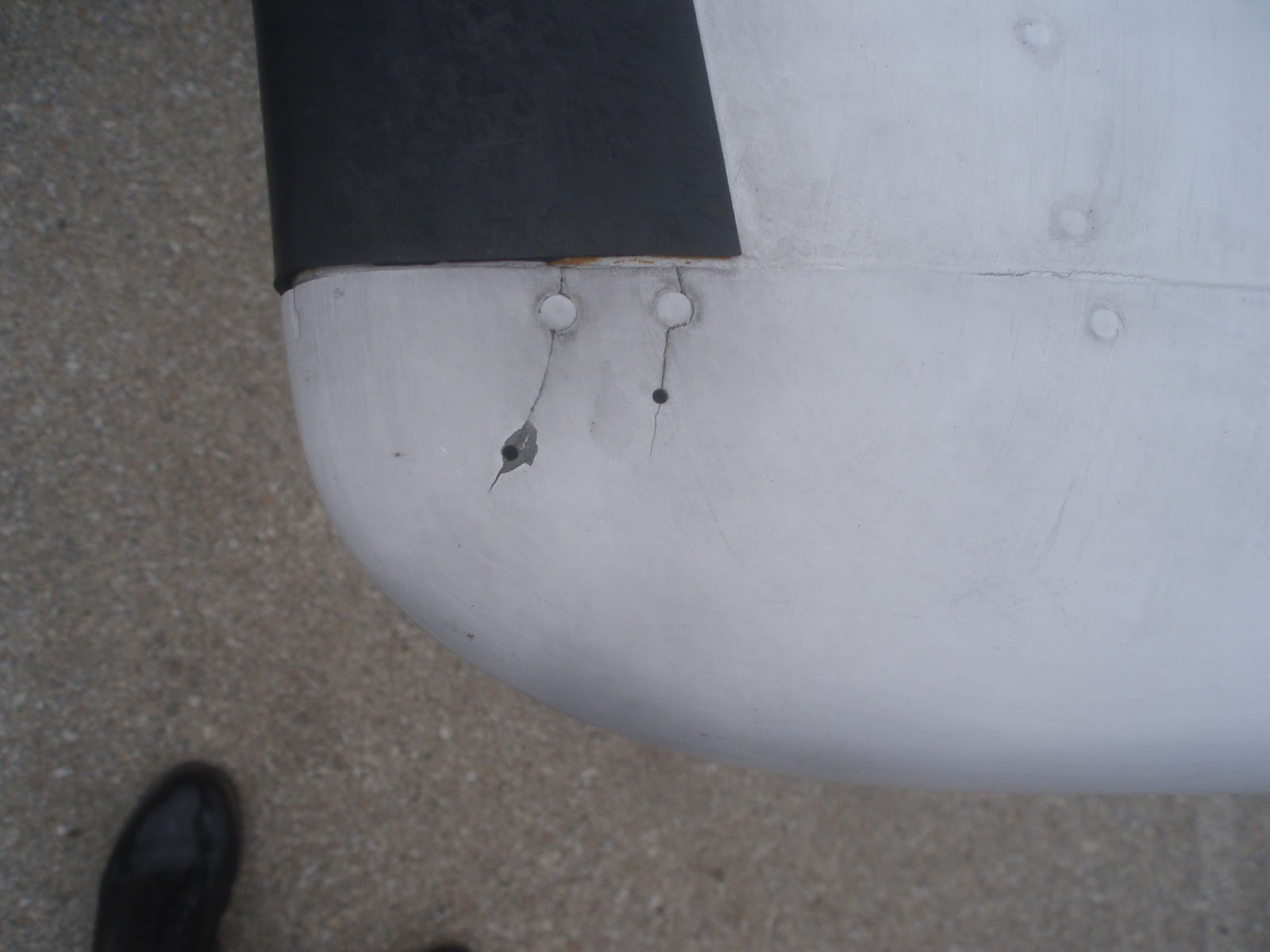
While Chad was doing his preflight walk-around and check, I also inspected the airplane.  It was obviously well used but clean and in good repair.  I had some misgivings about some cracks in the wing tips but nothing seemed urgent or dangerous. 


Mr. Quinn asked Chad to take care the propwash didn't hit the open hangar and cautioned us about some issues with the autopilot losing altitude and we buckled in to our seats in the cockpit.  Chad gave me a headset to wear so we could talk over the engine noise and we were on our way.

It was a mostly cloudy day with gusty winds so we were flying IFR and therefore filed a flight plan.  It's a fairly complex procedure involving planning the course and contacting both the FAA and the respective airport tower controllers.  However, Chad is quite proficient at it and the agents at the FAA and the control towers were professional and efficient so it went quickly.  


The takeoff was uneventful and soon we were headed to the airport in College Station.  By highway it's about a 2-1/2 hour’s drive of 102 miles.  From the Georgetown Municipal Airport (KGTU)  Easterwood Airport in College Station (CLL) it’s 65 nautical miles (about 75 statute miles) and the trip took about 35 minutes from takeoff to landing.  Our airspeed was typically about 130-140 knots (about 150-160 mph).


It was a routine flight so Chad let me pilot the airplane part of the way.  It had been over a year since I'd piloted a 182 so this was a real treat.  I like the smooth, forgiving control and robust power (for a single engine airplane) of this plane.  I still prefer gliding though, since that's as close as I've been to true flying.


At the FBO (Fixed Base of Operator - the administrative building at the airport) we borrowed a courtesy car (yes, pilots are treated well!) and drove into town.  The tradition is to have a burger on the outbound leg of the trip.  A practice flight like this burns about $100 in fuel, hence the term "Hundred Dollar Hamburger!"  So we drove to a local hamburger restaurant and each had a hamburger platter and drinks (non-alcoholic of course!).  At Fatburger I had a buffalo burger that was quite good. The receptionist recommended next time we try the Koppe Bridge Bar and Grill.

We had some time to kill, so we drove around the Texas A&M College Station campus.  It was Spring Break, but there was still some activity.  It's a large campus in terms of acreage so bicycles were everywhere in large quantities.  In spring the campus is quite attractive and it would have been nice to stroll about - but we didn't have that much time.  I decided it would be worth a return trip to see the George H. Bush Presidential Library and Museum sometime.


Near the airport we also saw the Oran W. Nicks Low Speed Wind Tunnel which would be an interesting tour someday too.


Although the sky was clearing when we returned to CLL, the wind was picking up.  Chad filed another flight plan and we took off on the return trip to KGTU.  It was a pretty routine flight back, except the controller in Houston chided us for dropping low from our assigned altitude.  Apparently the autopilot didn't hold altitude well.  We took turns flying manually and watched the altimeter closely the rest of the way.


It was pretty gusty with a strong crosswind when we finally had the Georgetown airport in our sight.  I was glad to let Chad land since my student training wasn't up to these conditions yet.  He's an experienced, IFR rated pilot and brought the plane down safely, though with a bit of floating and a few small bounces.  That just added to the excitement of the trip!


Before returning the plane to the hangar Chad filled up and sure enough, it was nearly $100 for the fuel.  At about $4.50 a gallon for Avgas, that's not all that much fuel really. The 182 is an efficient little plane quite suitable for short commutes like this.  I look forward to the day when I can hop in my own plane and go out for a $100 hamburger!


Tuesday, March 22, 2011

THE LITTLE THINGS - MAKING SOAP PART I OF III


As I wrote earlier, I’ve been experimenting with making my own laundry soap.  I believe I’ve been successful, but since my daughter (who seldom spends any money on household items) bough ther own laundry detergent, the jury’s still out on that subject.

One of the more costly ingredients is soap.  Pioneers used to make their own, so why can’t I?  A little research told me that they made it from grease and wood ashes.  Fine, I have both.  So, I save our grease from cooking and wood ashes and am preparing to make my own soap.

The given recipe was to fill a barrel with ashes, soak them in water for a few days, and then drain off the water.  The result is then heated to evaporate the excess water and reach the desired concentration of lye water. Simple? Not.

I already had a large $10 plastic garbage can for recycling that could serve as a barrel.  So, knowing it would be heavy and needed to be positioned up above a bucket, I built a small platform that had two levels, one for the barrel and the other for the bucket to receive the lye water.  Some wood from a discarded concrete form provided the materials for the stand and I found a bucket on the roadside.  Viola!  A free lye barrel stand and collection bucket.

THIS USED PLASTIC CHEMICAL BARREL WAS ONLY $5 AND RESISTS THE CORROSIVE EFFECTS OF THE LYE WATER BETTER THAN A STEEL DRUM OR A CONVENTIONAL PLASTIC GARBAGE CAN.


To fill the barrel, some rocks are added to the bottom of the barrel to provide space for water to drain out.  On top of this was placed a fitted plywood spacer to hold the ashes above the rocks.   (I later learned it helps to drill some finger holes in the plywood for easy removal!)  On top of this about three inches of hay was placed to keep ashes from filtering down to the bottom and plugging the drain hole. 


NOTE BOLT USED TO PLUG DRAIN HOLE WITH SPLASH GUARD AND DRIP PIPE.  CARE SHOULD BE TAKEN WHEN REMOVING PLUG SINCE LYE WATER MAY BE UNDER PRESSURE AND COULD SPURT AND SPLASH.


On the first run I let the ashes steep for a few days and then drained it by drilling a small 1/8 in diameter hole near the bottom of the barrel.  I covered my precious bucket of lye water and set it down where I thought it would be safe and could evaporate in the sun.  No, one of the farm animals kicked it over.  Then the caustic ashes weakened the cheap plastic garbage can and it too cracked and fell over, dumping the contents and damaging the stand.  Back to square one.

ROCKS PLACED IN BOTTOM OF BARREL ALLOW WATER TO COLLECT AT DRAIN

An acquaintance had some blue plastic chemical barrels in their back yard they were glad to sell so I bought a couple and reinforced the stand.  Then I reassembled everything and ran another batch of lye water.  Success! Not yet.  

PLYWOOD BASE ON ROCKS SUPPORTS ASHES
This time I tried to be clever and made a concrete base for the barrel with a groove all the way around, a splash guard in front of the drain hole, and a spout.  What I forgot to do was seal the form around the concrete base.  It worked well, except that much of the lye water leaked out between the form and the concrete.  Lesson learned.  I plugged the drain hole with a  stainless steel ¼-20  UNC-2A stud and refilled the barrel and then sealed the base with roof cement.  Then I ran another batch.  Success! Yes!

HAY IS ADDED ON TOP OF PLYWOOD TO KEEP ASHES FROM PLUGGING DRAIN AS WATER LEACHES THROUGH
 Now I will try concentrating the lye water and see if it will make some soap in Part II.

AFTER THE BARREL IS FULL OF ASHES, WATER IS ADDED BY INSERTING A HOSE DEEP INTO THE ASHES. AIR WILL BUBBLE UP THROUGH ASHES, SO WEAR FACE AND EYE PROTECTION AGAINST SPLASHES.
 CAUTION: Ashes and lye water are very caustic.  Proper PPE should be used when handling them such as a dusk mask to keep from inhaling ash particles and gloves and safety goggles to keep skin and eyes from exposure!

All rights reserved 2011.

THE LITTLE THINGS- THE CAMERA DOCTOR IS IN


The reader may have noticed that this blog has relatively few pictures.  That’s partly because uploading them is rather tricky and uncertain, but also because my camera has been out of commission for some time.  I use an Olympus Stylus 760 All Weather digital camera  for most purposes.  I like it because the camera is affordable; it fits well in a pocket, takes decent pictures in both normal and macro modes, and is water resistant.  It’s also remarkably tough.

I have two of these cameras.  The first one I took to the Civil Air Patrol’s Hawk Mountain Ranger Training School . That was a wonderful time of living outdoors, training in search and rescue and getting to know some first class people.  It’s the toughest emergency services school the U.S Civil Air Patrol offers, and I lost over 30 pounds during the nine-day program.  (I also hurt my knee on the OC and took over a year to recover, but it was worth it!) Anyway, the camera survived the event too, but the viewfinder was cracked in the process.  The dark area around the crack slowly spread during the next several months as air leaked in and damaged the display.  Eventually it all turned black and was largely unusable.

It seemed like a simple matter to fix, for just the view screen needed to be replaced.  So, I found a mail-order camera repair company and sent the camera in with $60 for the work.  After a substantial delay, they sent the camera back saying it was beyond repair.  The camera still worked and took pictures, so I didn’t wholly accept their judgment, but neither they nor the manufacturer would sell me any replacement parts.

So, I bought another of the same model. (Partly because I liked the camera and partly to avoid having to relearn a new camera’s functions and features.)

I happily carried the new camera with me everywhere for about a year, even using it while working in my garden and on projects in the back yard.  That means the camera was subjected to shock, vibration, moisture, abrasion and worst of all, dirt.  In the pocket of my working jacket it was often liberally coated with dust, sand, sawdust and whatever else was floating about.  For awhile it worked just fine until some sand worked its way into the telescoping lens aperture.  Then it jammed in position and the camera refused to function anymore. 

This is not a criticism of the camera’s design or construction.  As an engineer, I really like the design and think very highly of the people who made it.  I am using it in ways that surely exceed the design criteria and accept the consequences since I haven’t found a similarly priced camera with the same features that is rugged enough for my use.

For awhile I had to borrow a camera whenever I needed to take pictures.  Friends and family were gracious and understanding, for awhile.  But I realized I was hard on cameras and would sooner or later damage one of theirs and have to replace both theirs and mine.  I couldn’t really justify buying another camera, let alone two!

My daughter suggested at that point I use the two damaged cameras to make one good one.  It was a sensible suggestion, be sounded very simplistic.  After all, I’d hear horror stories from people who’d taken a camera apart and had it literally explode its tiny, spring loaded precision parts in all directions once the cover was removed.  It’d tried some time ago to repair a 35mm reflex camera that had jammed, and given up shortly after removing a few portions of the external housing.  Now, I’m a degreed engineer and know something about mechanisms, but the camera is in a special class by itself for complexity and difficulty of repair.  Give me an old Kodak Brownie box camera – that’s about my speed!

Finally, after several camera less days and a multitude of missed photo opportunities, I relented.  After laying out some newspaper on the kitchen table, I took a miniature screw driver and a magnifying glass and scrubbed for surgery.  Carefully, I removed the tiny screws that hold the housing on my Stylus 760 and removed the housing.  Not too bad. 

Nothing sprang loose, and I removed the trim strip and power buttons.  Four more screws later I had the viewfinder assembly loose and saw that it had only one ribbon cable connecting it to the main body.  It is an ingenious design where a tiny plastic clamp keeps the ribbon cable secure in the connector, but allows it to be inserted and removed repeatedly.  I was delighted.


THE DAMAGED VIEWING SCREEN AND THE TOOLS OF THE TRADE


In short order I had swapped the viewfinder assemblies and tested the good one before reassembly.  It worked!  Then I reassembled both cameras and began taking pictures with the result. 


I was feeling heady with my success and tried to fix the flat screen monitor that was also broken.  It was one of the few nice computer gadgets we have, and somehow the power button had been mysteriously mashed into the housing.  It was either the cat or my daughter that had probably knocked it off the desk and done the damage.  Since it somehow returned to the desk top, I think it was unlikely the cat did it. 

Anyway, I disassembled the monitor and admired its quality construction.  I found the problem – the plastic switch button had been forced in under the front panel.  A little tweaking and it was fixed.  However, the monitor would still not turn on.  This one was beyond me.  Well, batting 0.500 isn’t too bad and I saved about $100 with just 30 minutes work.